– The Tea Journal –
Every Blend Has a Story
A blend begins with ingredients. But somewhere between intention, discovery, and the person holding the cup, it can become something more.
Behind the Blends
|
About 8 minute read
|
September 2026
It Begins With a Cup
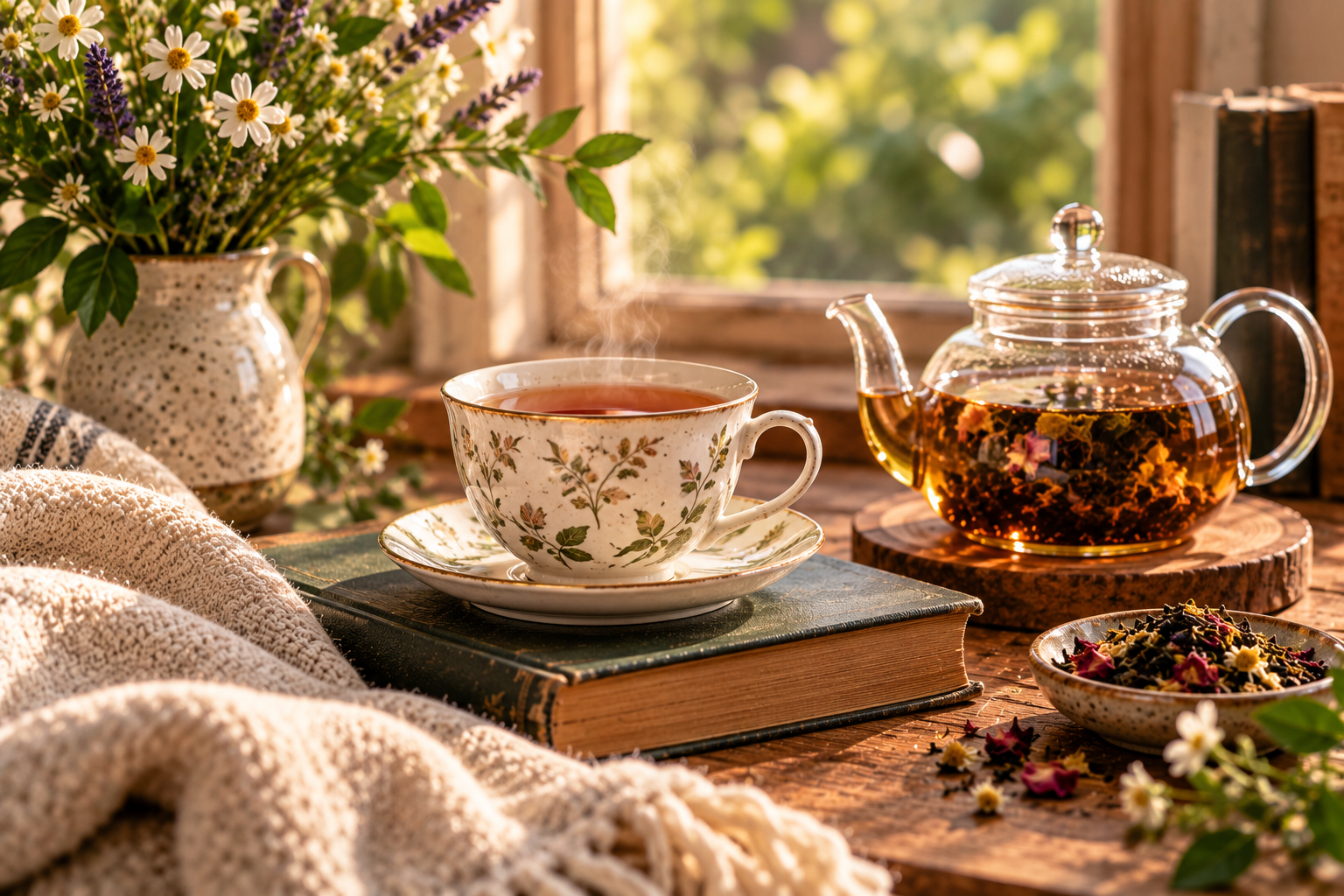
There is a cup of tea sitting on the table.
Perhaps it is amber.
Perhaps crimson.
Maybe an impossible shade of blue.
Steam rises from the surface, carrying an aroma that disappears almost as quickly as you notice it.
You take a sip.
And for a moment, that is all it needs to be.
Tea.
But look a little closer and the cup begins to unfold.
There are leaves inside it that grew somewhere.
Flowers that once opened.
Herbs that were harvested.
Spices that traveled.
Someone chose those ingredients.
Someone decided how much of each belonged together.
There were experiments that worked.
Probably a few that didn’t.
There was a moment when someone tasted the cup and thought:
There you are.
And even then, the story wasn’t finished.
Because eventually the cup reached you.
What Do We Mean by a Story?
For most loose leaf teas and herbal blends, a useful starting point is about 1 teaspoon of tea for every 8 ounces of water.
When we say Every Blend Has a Story, we don’t mean that every tea needs an elaborate tale invented around it.
A story cannot rescue a blend that doesn’t belong together.
The tea has to come first.
Instead, we think of the story as everything that gives a blend its particular character.
Why these ingredients?
Why these proportions?
Why does one flavor arrive first while another waits until the finish?
Why this color?
Why this feeling?
Why this name?
Sometimes we know the beginning before we ever make the first test blend.
Other times, we don’t understand the story until the cup tells it to us.
That distinction matters.
Because a story can be imagined.
But it can also be discovered.
We don’t want a story to tell you what you must experience in a cup. We want it to give you another way to enter it.
Sometimes the Idea Comes First
There are blends that begin with a feeling.
Perhaps we are thinking about the stillness of evening.
The freshness of morning.
A garden after rain.
A familiar companion.
The feeling of being warm inside while the world outside is cold.
Those ideas can give us somewhere to begin.
But they don’t give us a recipe.
For that, we have to ask what the ingredients themselves can actually do.
Which tea has the right foundation?
Should the cup feel light or full?
Would mint create the freshness we’re imagining?
Would ginger provide warmth?
Would a flower contribute something meaningful, or would it simply look beautiful in the dry blend?
The original idea becomes a direction rather than a set of instructions.
Then we start blending.
And listening.
Sometimes the Ingredients Speak First
Other blends begin without much of a story at all.
An ingredient catches our attention.
Or two ingredients seem as though they might have an interesting conversation.
We wonder what would happen if they met.
So we put them together.
Sometimes the answer is:
Not much.
Sometimes the answer is:
Absolutely not.
And every once in a while, the answer is something we hadn’t anticipated.
A contrast appears.
A surprising aroma emerges.
One ingredient changes the way another is perceived.
The cup develops a character that wasn’t there on paper.
And suddenly we’re no longer asking what story we should give the blend.
We’re asking what story it has been trying to tell us.
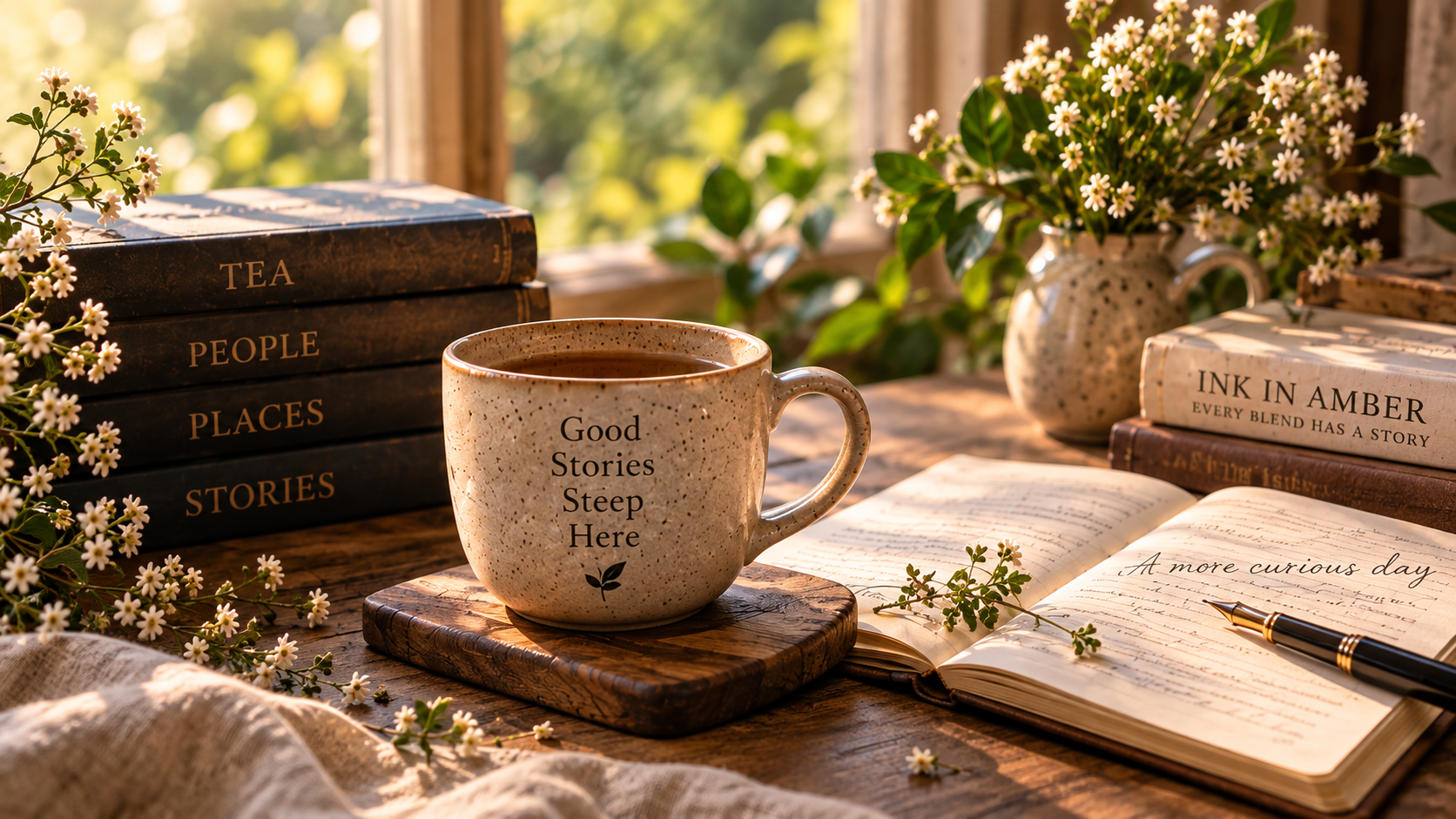
We love starting a good story with tea.
The Cup Gets a Vote
This is something we have learned to respect.
You can have a wonderful idea for a blend.
You can choose ingredients for thoughtful reasons.
You can imagine exactly how the finished tea will taste.
And then you can pour the water and discover that the cup has other plans.
An ingredient disappears.
Another becomes much louder than expected.
Something that smelled extraordinary while dry becomes almost invisible after brewing.
A tiny amount of something changes the entire finish.
Or two ingredients that seemed like opposites somehow create balance.
At that point, we could insist that the tea conform to our original idea.
But that would mean ignoring the most important piece of evidence sitting in front of us.
So the cup gets a vote.
Sometimes it gets the deciding one.
There is a difference between making a blend obey an idea and discovering what the blend wants to become.
Then Someone Else Tastes It
This may be where things become most interesting.
When you’ve spent enough time developing a blend, it becomes difficult to meet it without expectations.
You know what is in it.
You know what you intended.
You remember the previous versions.
You know which ingredient you adjusted and what you hope that adjustment accomplished.
Then someone else tastes it.
They don’t have all of that information.
They simply have the cup.
And sometimes they notice exactly what you hoped they would.
Sometimes they don’t.
Sometimes they find something you completely missed.
A blend you thought was energetic may feel comforting to someone else.
A cup intended to be peaceful may make another person feel alert.
Someone may describe an aroma using a memory rather than a flavor.
They might say:
It reminds me of a garden.
Or a rainy afternoon.
Or sitting beneath a blanket with a book.
Those answers matter.
Not because we need everyone to experience the same story.
But because they remind us that once a cup leaves our hands, we are no longer its only authors.
A Name Comes Later
Naming a blend is one of the last opportunities we have to speak before the person drinking it begins forming their own relationship with the cup.
That makes the name important.
We want it to offer something without explaining everything.
A good name should leave a little room around itself.
Room for curiosity.
Room for interpretation.
Room for someone to discover their own meaning after they’ve made the tea several times.
That is one reason we are drawn to names that feel a little like titles on the spine of a book.
First Light.
The Garden Gate.
When Butterflies Gather.
Whichever Way.
The Wanderer.
As You Are.
An Old Friend.
The World Can Wait.
They suggest.
They don’t instruct.
A name can open the door.
The cup still gets to decide what is on the other side.
The Story Changes Hands
Eventually, we seal the pouch.
From that moment forward, something changes.
The blend no longer belongs entirely to the place where it was created.
Someone else opens it.
They smell it for the first time.
They decide which cup to use.
They may follow the brewing instructions exactly.
They may ignore them completely.
Perhaps they drink it while reading.
Perhaps during a conversation.
At a kitchen table before anyone else wakes up.
At a desk in the middle of a difficult afternoon.
Outside on a beautiful day.
Maybe they serve it to someone they love.
Maybe they forget about the pouch for months, find it again one rainy evening, and suddenly associate that tea with a particular season of their life.
We cannot design those moments.
And we wouldn’t want to.
Because eventually a tea can gather stories we had nothing to do with.
The Cup Remembers Differently
Taste and smell have a remarkable relationship with memory.
Sometimes an aroma can return us to a place before we’ve consciously understood why.
A familiar spice.
Citrus.
Mint.
Flowers.
The smell of black tea rising from a warm cup.
The experience is deeply personal because the memories attached to those aromas belong to the person smelling them.
That means two people can drink the same blend and encounter something entirely different.
One finds nostalgia.
Another finds novelty.
One notices comfort.
Another notices brightness.
One thinks of a garden.
Another thinks of home.
Neither has misunderstood the tea.
They have simply brought different lives to the cup.
And perhaps that is where the story of a blend becomes larger than anything we could have written for it ourselves.
What We Can Give the Cup
Our part is relatively small.
We can choose ingredients carefully.
We can learn about them.
We can experiment.
We can taste.
We can listen when something isn’t working.
We can keep adjusting until the blend feels complete.
We can give it a name that feels worthy of what it became.
We can tell you a little about where it came from.
And then we have to let it go.
The rest belongs to whoever makes the next cup.
Perhaps a blend’s story isn’t something we finish. Perhaps we only write the opening pages.
Every Blend Has a Story
When we first began using those words, they expressed something we felt instinctively about tea.
Now we understand them a little differently.
A blend has the story of its ingredients.
The places they came from.
The hands that grew and harvested them.
The transformations they underwent before reaching us.
Then there is the story of the blend itself.
The idea.
The experiments.
The mistakes.
The surprises.
The moment when the cup finally said, there you are.
And then there is your story.
The place you drink it.
The people you share it with.
The conversations that happen beside it.
The quiet moments when there is no conversation at all.
The memories that may eventually attach themselves to an aroma you didn’t know would matter.
We can begin a blend’s story.
We can give it a title.
We can even tell you what it meant to us.
But we don’t get to write the last page.
You do.
Continue the Story
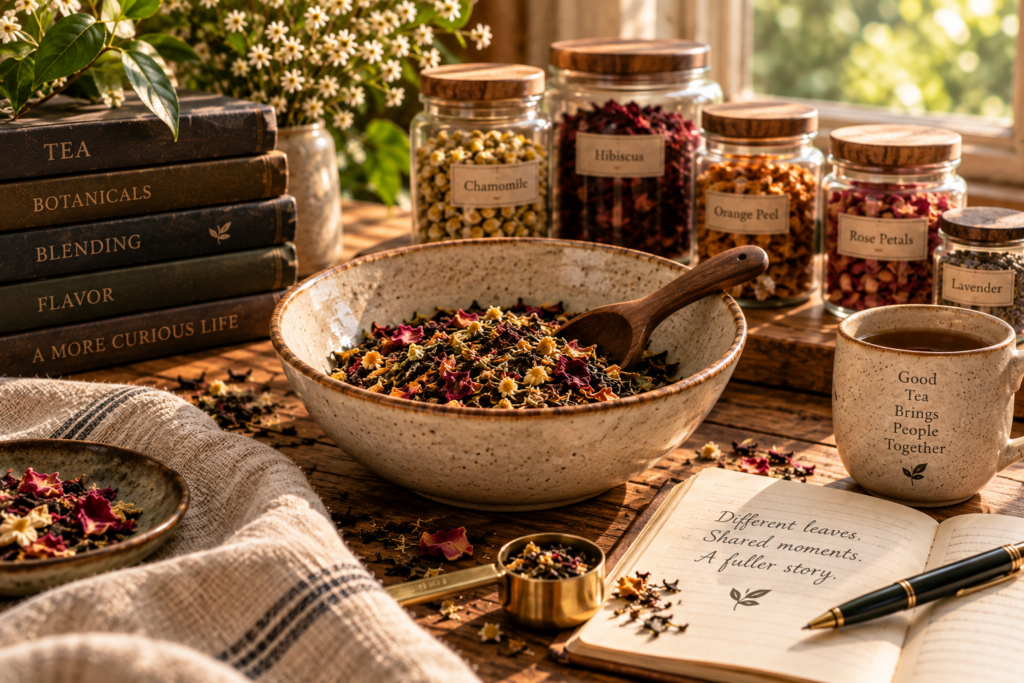
Why We Blend Tea
Leaves, flowers, herbs, spices, and ideas meet in the same cup. Here’s why we bring them together.
Read more…
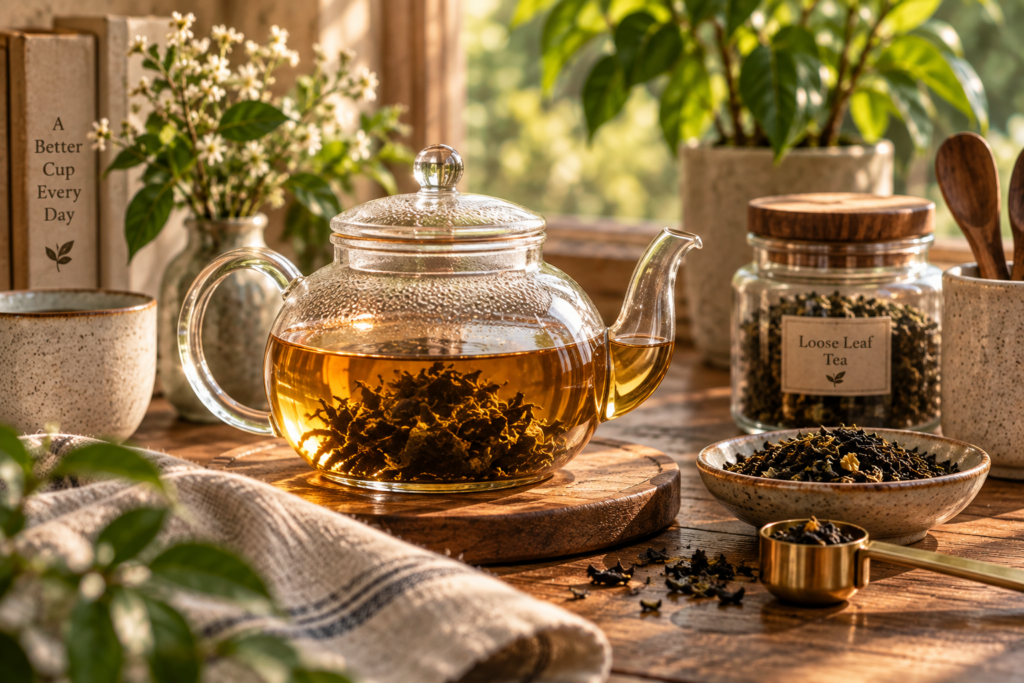
How to Brew Loose Leaf Tea
Every story in the cup begins the same way: leaves, water, time, and a little attention.
Read more…