– The Tea Journal –
Tea, Tisane, or Herbal Infusion?
We call many things “tea.” Technically, not all of them are. The distinction leads somewhere surprisingly interesting.
Tea & the Leaf
|
About 6 minute read
|
September 2026
When Is Tea Not Tea?
Chamomile tea.
Peppermint tea.
Hibiscus tea.
Rooibos tea.
We use these names so naturally that there seems little reason to question them. Put dried plants in hot water, wait a few minutes, and you have tea.
Except, technically, you might not.
In the traditional sense, tea comes from one particular plant: Camellia sinensis.
Black tea comes from it.
Green tea comes from it.
White tea comes from it.
Oolong comes from it.
The differences between these teas can be extraordinary, but they share the same botanical origin.
Chamomile, peppermint, hibiscus, rooibos, and the many other plants we commonly prepare in much the same way do not come from Camellia sinensis.
So what are they?
This is where we encounter a lovely little word:
Tisane.
Tea Begins With a Plant
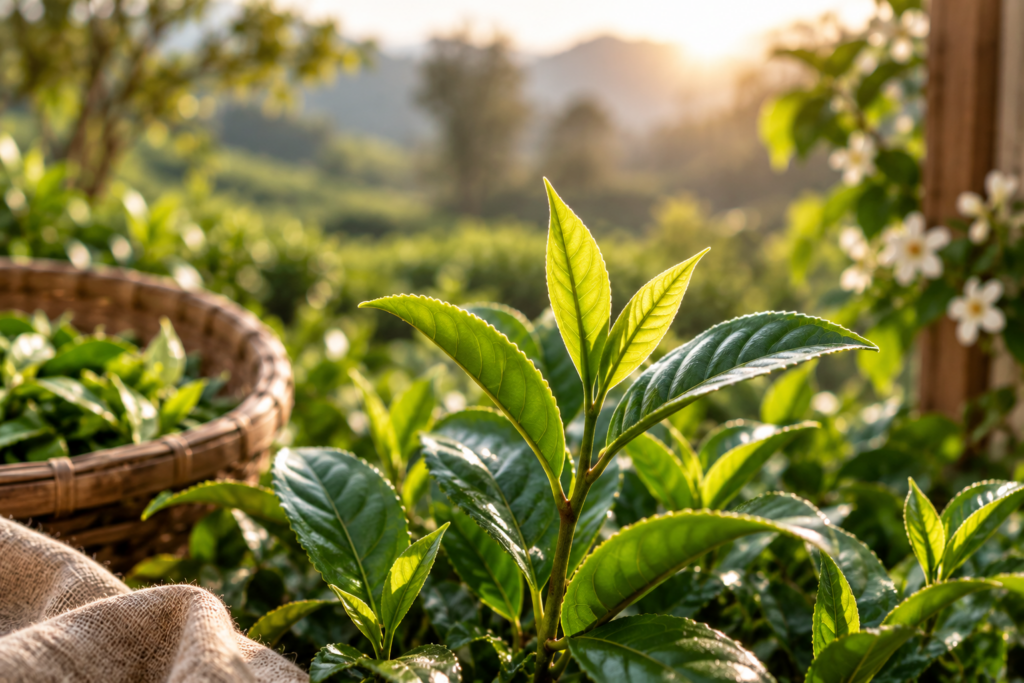
Before distinguishing tea from everything else in the cup, it helps to meet Camellia sinensis.
It is an evergreen plant native to parts of East, South, and Southeast Asia, and humans have cultivated its leaves for tea for a very long time.
What becomes fascinating is just how many different experiences can begin with those leaves.
A delicate white tea and a robust black tea may seem worlds apart. A grassy green tea might have little obvious resemblance to a deeply roasted oolong.
Yet they are relatives in the closest possible sense.
Their differences arise from where and how the plant is grown, which leaves are harvested, and—especially—what happens to those leaves after they are picked.
Withering, rolling, heating, oxidation, drying, roasting, and countless variations in craftsmanship can take the same plant in remarkably different directions.
We will explore those transformations elsewhere in The Tea Journal.
For now, the important distinction is wonderfully simple:
If it comes from Camellia sinensis, it is tea.
Black, green, white, and oolong are not different species of tea plant. Their remarkable differences are largely created by cultivation, harvesting, and what happens to the leaves after they are picked.
Then What Is a Tisane?
A tisane is an infusion made from plant material other than Camellia sinensis.
That plant material might be flowers.
Chamomile blossoms can become a tisane.
It might be leaves.
Peppermint can become one.
It might be roots or rhizomes, such as ginger.
Bark, seeds, spices, fruits, berries, and other botanicals can all find their way into an infusion.
And sometimes many of them meet in the same cup.
The word may sound rather formal if you’ve never encountered it before, but the idea behind it couldn’t be simpler:
Plant + water + time.
The water draws soluble compounds from the plant material, carrying flavor, aroma, color, and other components into the cup.
In everyday conversation, most of us simply call the result herbal tea.
And that’s perfectly understandable.
So Is “Herbal Tea” Wrong?
Not in any way that should make us police someone’s teacup.
Language has a practical job to do.
When someone offers you peppermint tea, you know exactly what they mean. Nobody benefits from interrupting them to announce that they are actually drinking a peppermint tisane.
Herbal tea is a familiar and widely understood term.
Herbal infusion is another.
Tisane is simply a more precise word that becomes useful when we want to distinguish botanical infusions from true tea.
Knowing the distinction isn’t about correcting people.
It gives us another way of understanding what is in the cup.
And once you know it, you begin noticing something else.
Not every tisane is particularly herbal.
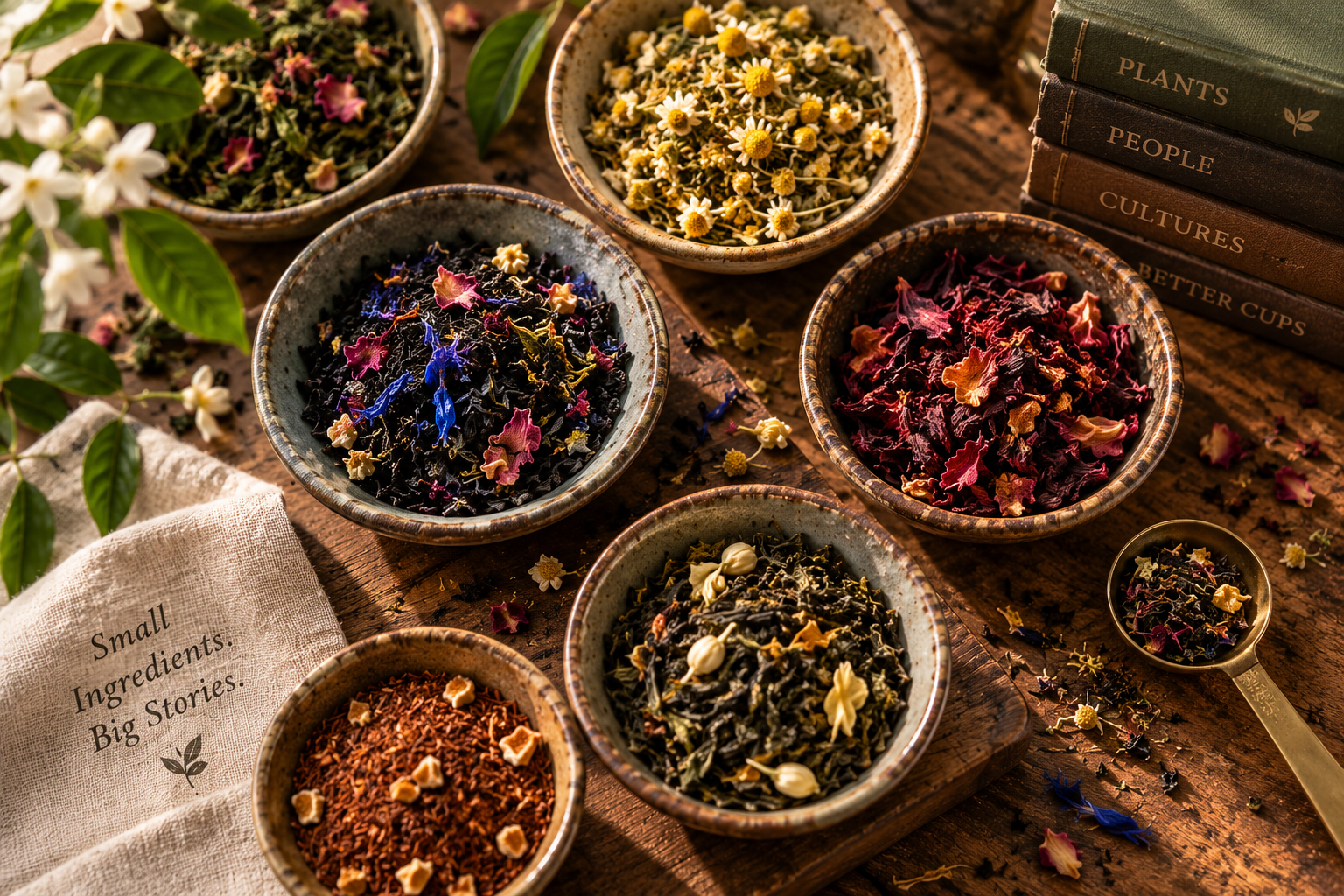
Ingredients can be both beautiful and tasty.
Flowers, Leaves, Roots, Fruit—and a Red Bush
Chamomile is made primarily from flowers.
Peppermint gives us leaves.
Ginger contributes a rhizome.
Hibiscus infusions commonly use the fleshy calyces surrounding the plant’s flowers.
Then there is rooibos.
Rooibos comes from Aspalathus linearis, a shrub native to South Africa. It isn’t Camellia sinensis, so despite commonly being called rooibos tea, it belongs on the tisane side of our distinction.
That also means the world of tisanes is enormous.
There isn’t one botanical equivalent of the tea plant tying everything together.
Instead, there are many plants, many plant parts, many traditions, and an astonishing range of flavors and aromas.
Some are floral.
Some earthy.
Some cooling.
Some tart.
Some spicy.
Some naturally sweet.
Some can be surprisingly bitter.
Calling all of them simply “herbal tea” is convenient, but looking a little closer reveals just how varied the category really is.
And Then We Start Blending
This is where the neat distinction between tea and tisane becomes especially interesting for us.
Imagine a cup containing chamomile, peppermint, and lemon balm.
That’s a botanical infusion—a tisane.
Now imagine another containing black tea and orange peel.
That contains true tea alongside a botanical.
Add flowers, herbs, spices, or fruit to Camellia sinensis, and suddenly our cup belongs to more than one world.
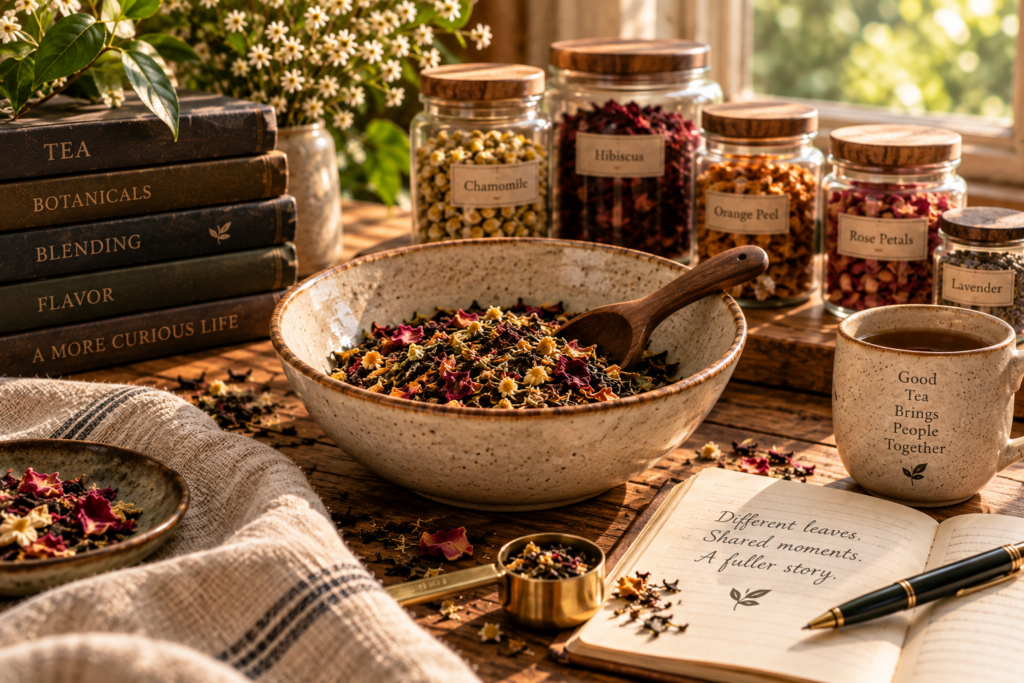
This is one of the reasons blending is so fascinating.
A tea leaf can provide structure and body while a flower contributes aroma. A spice can bring warmth. Citrus peel can introduce brightness. A botanical may change not only the flavor but the color, mouthfeel, aroma, and entire personality of the cup.
The vocabulary helps us understand the ingredients.
But the cup doesn’t particularly care about our categories.
Everything meets in the water.
Categories help us understand tea, but they don’t need to become walls. Some of the most interesting cups begin when ingredients from different botanical worlds meet.
One More Distinction: Infusion and Decoction
There is another useful word hiding nearby.
Most tea and tisanes are prepared by infusion: hot water is poured over the ingredients and they are allowed to steep.
But tougher plant materials sometimes benefit from a different method.
Roots, bark, seeds, and certain spices may be gently simmered in water for a period of time rather than simply steeped. Traditionally, this preparation is called a decoction.
You don’t need to memorize that before making your next cup.
But now, if you encounter the word somewhere in your travels through tea and botanicals, you’ll know why it’s there.
And perhaps you’ll follow that thread a little further.
Does the Name Change the Cup?
Not at all.
Your chamomile tastes exactly the same whether you call it chamomile tea, chamomile tisane, or chamomile infusion.
But perhaps the next time you make it, you’ll look at those tiny dried flowers a little differently.
They aren’t tea leaves pretending to be tea.
They are chamomile blossoms participating in a much larger human habit: discovering what happens when plants meet water.
And somewhere else in the cupboard sits another remarkable plant—Camellia sinensis—whose leaves alone have given us white tea, green tea, oolong, black tea, and many other traditions and styles.
Two enormous worlds have been sharing the same everyday word:
Tea.
Knowing the difference doesn’t make the cup better.
But it gives us another question to ask.
And around here, that’s usually where the interesting part begins.
Continue the Story
From Leaf to Cup: What is Tea?
Black, green, white, and oolong teas can look and taste remarkably different – yet they begin with the same remarkable plant.
Read more…
Why We Blend Tea
What happens when leaves, flowers, herbs, spices, and ideas meet in the same cup? A look inside the philosophy behind our blends.
Read more…